


Equa HealthMeditation isn’t mystical.
It’s measurable.
Most meditation apps ask you to trust them. Equa tracks your breath through your phone and shows you how deep you’re actually going.



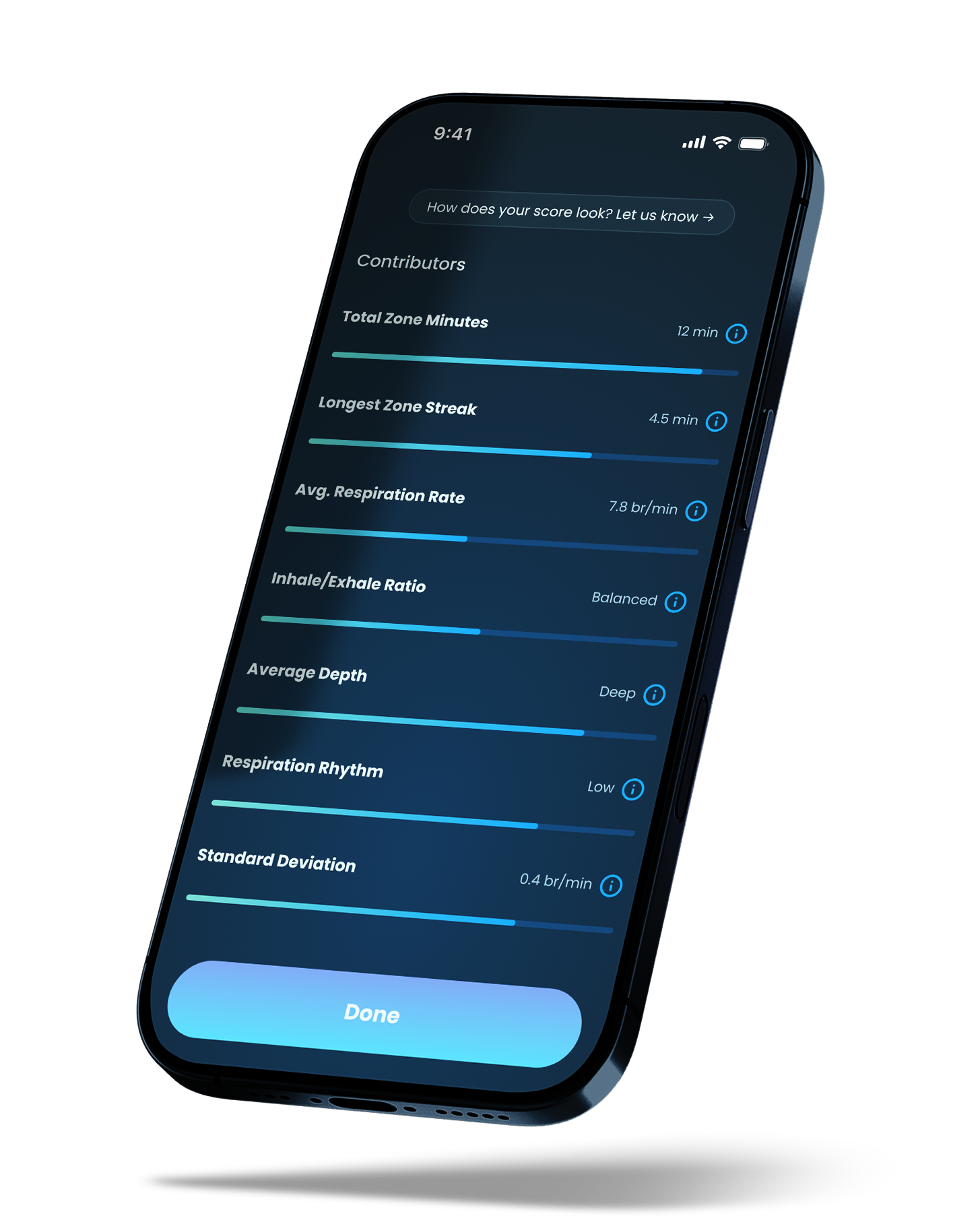
MEDITATION PERFORMANCE INSIGHTSProof your practice is working.
Most meditation apps ask how you feel. Meditation Performance Insights shows you, with the world’s first Meditation Performance Score, built from your own breath and tracked in real time on your phone.
No wearable required. Your phone’s sensors read your breathing live while you meditate.
Every session gets a score. Each practice earns a Meditation Performance Score from 0 to 100.
See what’s behind the number. Track time in your ideal zone, respiration rate, consistency and more, so you can see your progress instead of guessing at it.
Built on real science. Equa Health is an NIH-backed company, with research led by David Creswell, Ph.D., Professor of Psychology & Neuroscience at Carnegie Mellon.



Science-backed MindfulnessWhy Equa?
Equa is a science-backed mindfulness training system designed to change how you respond to stress.
We don’t just ask you to “relax,” we teach practical skills for regulating emotions, working with discomfort, and staying engaged when things get hard, so you can show up better in real moments, not just during meditation.

Science-backed MindfulnessBuilt at Carnegie Mellon. Proven in placebo-controlled trials.
Equa was developed at Carnegie Mellon’s Health and Human Performance Lab and is grounded in over 15 years of research on attention, stress, and performance. The results are clear
Train anywhere. Apply it everywhere.
Equa helps you build mindfulness skills you can use in meetings, workouts, difficult conversations, and high-pressure moments, not just during formal meditation.
Skills-based mindfulness curriculum
Short, routine-driven practice
Guided application for real life
Personalized mindfulness coaching in your pocket.
You get a digital mindfulness coach and a training plan tailored to your goals, stress patterns, and progress, plus accountability and clear feedback so you know what’s working and why.
Frequently Asked Questions
-
Your brain is a muscle. Equa believes you must train it accordingly.
Every meditation app takes a different approach. Some offer sleep stories, others follow specific Buddhist traditions, while Equa teaches skills.
We’re not saying Equa is perfect for everyone. Or that meditation won’t be a challenge. In fact, in many cases, that challenge is proof that something is happening. Just like working out in the gym, you have to exercise to build the muscle.
But for many people, it wasn’t the practice alone that failed – it was the lack of feedback. Many tools ask you to show up consistently and simply trust that something is happening. But early effects of meditation are subtle, especially at first.
To help with this, Equa shows you what is happening from the start. When your respiration data gives you a concrete signal that your body is responding, "I don't think this is working" stops being a reason to drop off.
-
Nope! If it’s not for you and you just want to learn our evidence-based meditation approach, you can easily turn it off at any time.
-
No experience needed. In fact, Equa is carefully designed to solve a problem many beginners hit: they can’t tell if they're doing it right, don't see progress, and then don’t continue as a result.
Our training starts by introducing core concepts around respiration tracking and the Unified Mindfulness System, and provides options that allow you to take your practice where you want it to go. The respiration feedback means you're not flying blind.
If you've never meditated before, Equa a great place to start.
-
That depends. Are you interested in learning a new system of mindfulness that uses clear terminology and rigorous precision around concepts and procedures to train the core skills of Concentration, Clarity, and Equanimity? Equa leverages Unified Mindfulness and the teachings of Shinzen Young, which has a refined support structure that any individual at any stage of meditation practice can rely on to go deeper in their practice. Equa also takes a secular approach to meditation, which means it’s not religious in any way, so anyone, of any faith, can do it.
-
No. The training protocol is based on peer-reviewed science, not any faith or spiritual framework. There’s no belief system required, no terminology borrowed from religion, and no instructor-centric philosophy. It's a method. What you do with the results is up to you.
-
Research shows that consistent, structured practice produces measurable changes in attention and stress biology. "Consistent" doesn't mean long. It means regular. We propose as little as a few minutes per day to start, knowing that if you do grow into more, the effects will only grow with your commitment.
-
Here's what the research shows: consistent attentional training produces measurable changes in how the nervous system regulates. Many people notice downstream effects on focus, stress response, and sleep quality. What we won't do is promise that Equa is a treatment for anxiety, insomnia, or any clinical condition – because while it can supplement your treatment plan, it isn’t a replacement for medical treatment.
-
Your respiration data belongs to you. We don't sell it. We don't use it for advertising. If at any point you want your account data deleted, just ask: support@equahealth.io.
-
Other apps give you a buffet of content to consume. Guided sessions, sleep stories, ambient audio. There's nothing wrong with that, but consuming content isn't the same as building skills. Equa is a training platform. Your respiration is tracked in real time, measuring your attention from session to session, and the app adapts to where you actually are – not a generic user profile. You can see your practice improve over time. That's new.
-
Equa began as a control arm of a placebo-controlled clinical study in the Health and Human Performance lab at Carnegie Mellon University. It did so well that Dr. David Creswell, a leading researcher in the cognitive neuroscience field, believe that the world beyond research participants could benefit from it. He teamed up with Mat Polowitz, Equa co-founder and CEO, who is a product-minded entrepreneur and meditation trainer as well, to bring this powerful research to the world.
-
Yes. Equa's methodology is developed in partnership with both Dr. David Creswell’s Health and Human Performance Lab at Carnegie Mellon University, and the Unified Mindfulness System. The research underpinning our training protocol is peer-reviewed. We teach what the science shows – not more, not less. If you want to read the studies, check out the Science section of our website to learn more.
-
Your breathing is one of the only physiological signals you can both consciously control and observe passively. During practice, changes in your respiration rate map directly to changes in your attentional state. Equa reads that signal in real time. Instead of guessing whether you're doing it right, you can see it. That feedback loop helps us turn passive sitting into active training.
-
Consistent practice – even as little as a few minutes each day for 14 days – produces measurable changes in attentional control and stress biology. Specifically, the science of Equanimity and Acceptance Skills – or leaning into discomfort with a lens of acceptance and curiosity – yield the strongest outcomes in building the foundation of a more positive mindset. That's what our Carnegie Mellon research shows. We're not claiming it rewires your brain in a few days or fixes everything at once. It's a training effect that follows the same logic as physical conditioning. Show up consistently, and the muscle will build with reps.
-
It’s a training tool, where the underlying technique is grounded in mindfulness meditation.
Unlike other meditation apps that offer a buffet of relaxation content, the goal in Equa is skill development. You're training your attentional capacity – the same way you'd train strength or endurance – with measurable inputs and outputs.
If a "meditation app" has ever felt like it wasn't taking you deep enough, that's probably because it was focused more on momentary relaxation than enduring mindset change.
-
It's not better, but it is different in a specific way. Most people who try meditating and quickly drop off have a hard time trusting that anything is happening. The practice feels challenging, or worse, like nothing, so why stick with it? But we know that certain styles of meditation produce real impacts on stress biology – in everything from systolic blood pressure to cortisol and much more. Respiration feedback gives you an immediate signal that something measurable is actually occurring. When you can see your nervous system regulating, "trust the process" becomes "watch the data." This helps you validate the process, rather than trust and hope that it works.
-
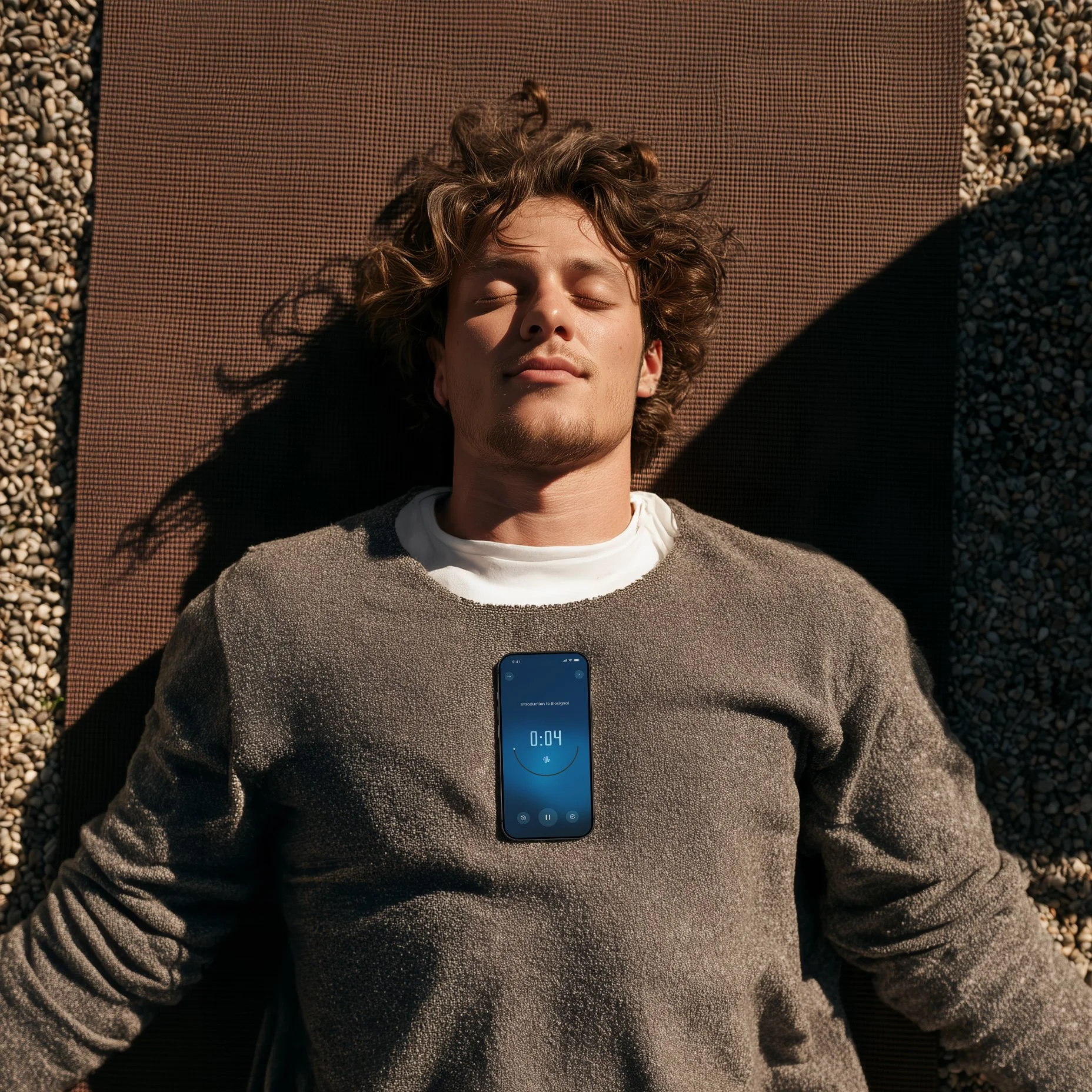
None! Equa’s respiration tracking uses the Inertial Measurement Unit in you phone – sensors like the Accelerometer and Gyroscope to record your breathing data.
You can do this simply by leaning back or laying down and placing the phone on your diaphragm. If you want to purchase a chest strap, you can use one to allow you to sit up while you practice. But that’s not necessary.